
Company new
7 Typical Problems & Practical Countermeasures of Polycarboxylate Superplasticizer in Concrete
Abstract
Polycarboxylate superplasticizer stands as the third-generation concrete water reducer. It delivers low dosage, excellent dispersion and flexible molecular design. It also brings green production routes for modern infrastructure projects. Yet complex raw materials and stricter engineering requirements create many application barriers. Engineers often treat Polycarboxylate superplasticizer as a universal fix for all concrete performance defects. Most performance fluctuations actually link directly to unstable raw material quality. Targeted analysis can stabilize concrete quality and secure long-term structural safety.
1 Poor Quality of Concrete Raw Materials
1.1 Manufactured Sand in Concrete Production
Natural sand resources shrink rapidly across many construction regions. Manufactured sand becomes a mainstream substitute for natural river sand. Crushing and screening decide the unique physical traits of manufactured sand. Its grain shape, fineness modulus and gradation can be manually adjusted. Rock powder differs fundamentally from clay mud inside natural sand. Appropriate rock powder improves workability and compactness of concrete mixes. Too much rock powder may raise shrinkage and harm concrete durability. You must test the MB value to separate clay powder from rock powder. Adjust PCE dosage moderately to offset mild negative impacts of rock powder.
1.2 High Clay Content in Sand and Aggregate
Clay minerals strongly suppress the dispersion effect of Polycarboxylate superplasticizer. Montmorillonite causes the most severe adsorption failure among clay types. Its layered crystal structure absorbs Polycarboxylate superplasticizer side chains through intercalation. Consumed PCE loses dispersion capacity inside fresh concrete paste. Three practical methods can ease this clay interference. First, raise the PCE dosage for immediate improvement, though costs rise. Second, add clay inhibitors to occupy clay surface adsorption sites. Cationic inhibitors block PCE molecules from entering clay interlayers. Third, adjust mixing sequence: mix cement, PCE and water first. Add aggregates later to reduce direct contact between clay and PCE.
2 Unreasonable Concrete Mix Proportion Design
Mix proportion shapes the viscosity and stability of concrete suspension systems. The Krieger-Dougherty formula describes suspension viscosity rules clearly. Well-graded particles gain higher maximum packing density. Equal water content brings lower viscosity and better flow performance. Poor gradation creates gaps that demand extra paste or free water. Insufficient cement paste cannot stop heavy aggregate particles from settling. Excess free water triggers bleeding and segregation of fresh concrete. Designers must optimize particle stacking to balance stability and fluidity.
3 Fast Slump Loss of Fresh Concrete
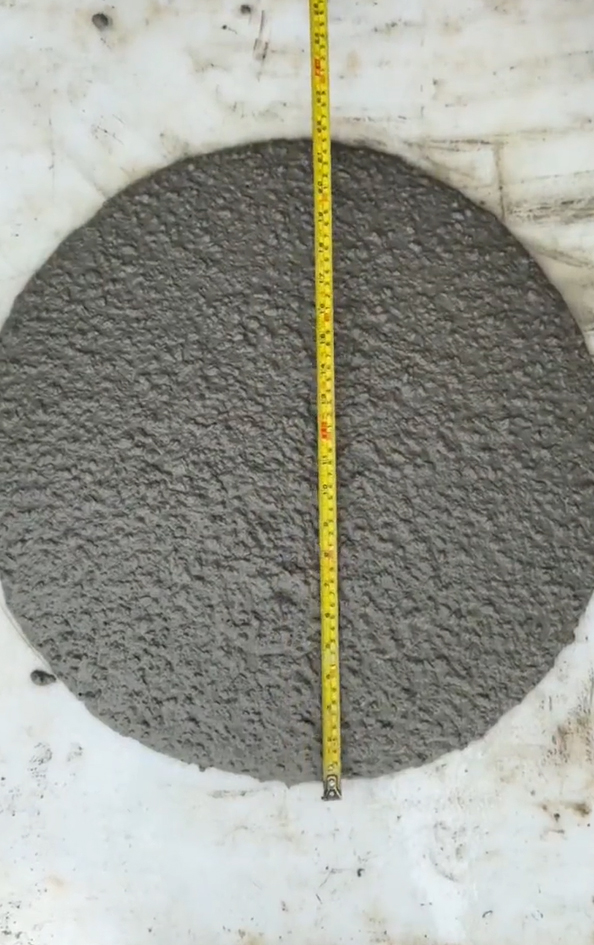
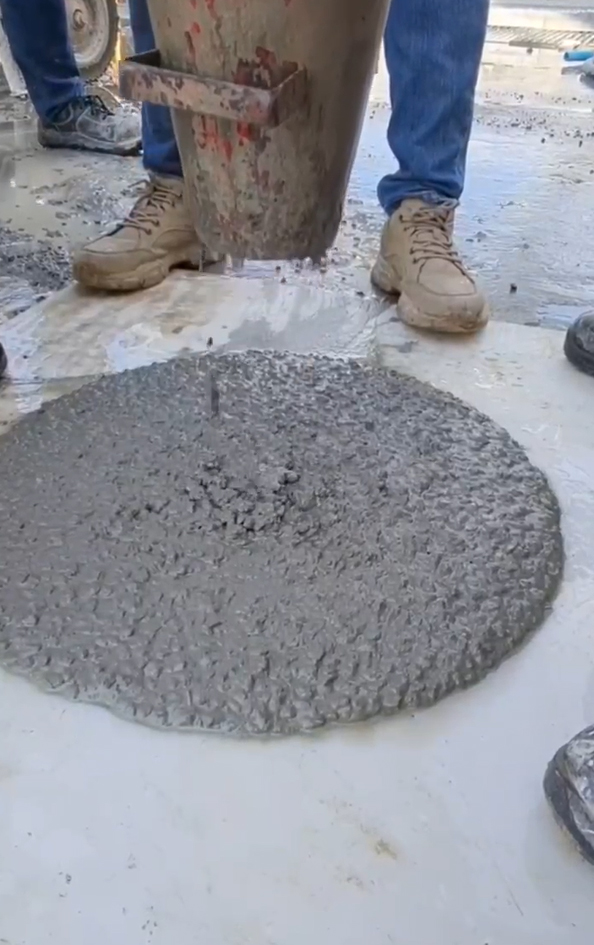
Slump retention matters greatly for ready-mix and super-high pumping concrete. Free water consumption and Polycarboxylate superplasticizer adsorption both speed up slump decline. Cement hydration and surface evaporation reduce available free water. PCE molecules exist in three states inside cement pore solution. Only free dissolved PCE continuously replenishes adsorption on cement surfaces. Four reliable strategies slow down rapid slump loss. Reduce direct exposure of fresh concrete to cut water evaporation. Select low-C3A, low-alkali cement with proper specific surface area. Add mineral admixtures to cut cement consumption and optimize gradation. Use slump-retaining Polycarboxylate superplasticizer with protected carboxyl groups. Ester groups hydrolyse gradually and release active dispersing groups over time.
4 Slow Early Strength Development of Concrete
Precast component factories pursue fast strength gain for faster mold turnover. Traditional hardening accelerators often conflict with PCE compatibility. Chloride accelerators bring corrosion risks to steel reinforcement. Ternary ethanolamine shows narrow safe dosage windows in production. Adjust Polycarboxylate superplasticizer molecular structures to achieve built-in early-strength performance. Increase sulfonate groups and cationic segments on the PCE backbone. Longer side chains also reduce hydration retardation of carboxylate groups. C-S-H crystal seed accelerators lower the nucleation barrier of hydration products. Crystal seeds speed up cement mineral dissolution and early strength growth.
5 Excessive Air Content in Concrete Mixes
Polycarboxylate superplasticizer belongs to surface-active agents. Its hydrophilic side chains reduce water surface tension and entrain air. Uneven large bubbles hurt concrete strength and surface finish. Three technical paths control harmful air content effectively. Check adaptability between cementitious materials and selected PCE. Adjust sand ratio, binder dosage and vibration time during casting. Use defoamers and special air entrainers in a “defoam first, entrain later” way. Engineers can also synthesize low-air-entrainment Polycarboxylate superplasticizer directly. EO/PO block polyether monomers reduce air entrainment from the molecular source.
6 Poor Workability of Fresh Concrete
Workability covers fluidity, cohesiveness and water retention of concrete. Low-strength mixes often bleed and segregate with high water-binder ratios. High-strength concrete usually shows excessive viscosity and slow flow speed. Viscosity modifying agents (VMA) fix segregation in low-strength concrete. VMA molecules trap free water and build weak gel networks inside paste. Several methods cut viscosity for high-performance concrete mixes. Spherical fly ash particles deliver “ball bearing” lubrication effects. Fine stable microbubbles from air entrainers reduce internal friction. Low-viscosity polycarboxylate superplasticizer optimizes water binding. Nonionic small polymer molecules act as co-dispersants at low water-binder ratios.
Conclusion
Polycarboxylate superplasticizer dominates today’s concrete admixture market. Many engineers overestimate its ability to fix all concrete defects. Raw material fluctuation, poor mix design and incorrect operation create troubles. You need to identify root causes before selecting targeted solutions. Continuous research and field practice push PCE technology forward steadily. Stable Polycarboxylate superplasticizer application guarantees reliable, long-life concrete infrastructure.
CATEGORIES
LATEST NEWS
- 7 Typical Problems & Practical Countermeasures of Polycarboxylate Superplasticizer in Concrete
- High-Performance Polycarboxylate Superplasticizer vs Standard Types: The Ultimate Comparison
- Explosive Price Surge: Daily‑Changing Chemical Raw Materials Fuel New Round of Price Hikes
- Influence of Over‑dosing Superplasticizer on Concrete Performance
- Maximizing Concrete Performance: Why Modern Construction Relies on Advanced Admixtures
CONTACT US
Phone: +86 18366819567
Tel: +86 543-3324448
Email: chengli@chenglicn.com
Add: 137-7# Yongxin Rd,Bincheng District,Binzhou City Shandong Province,China